
Bachelor of Politics and International Relations
Department of Politics and International Relations
Prepares graduates with a rigorous understanding of political theory, diplomacy, and international affairs, combined with the research, analytical, and communication skills required to serve in government, international organisations, and civil society.
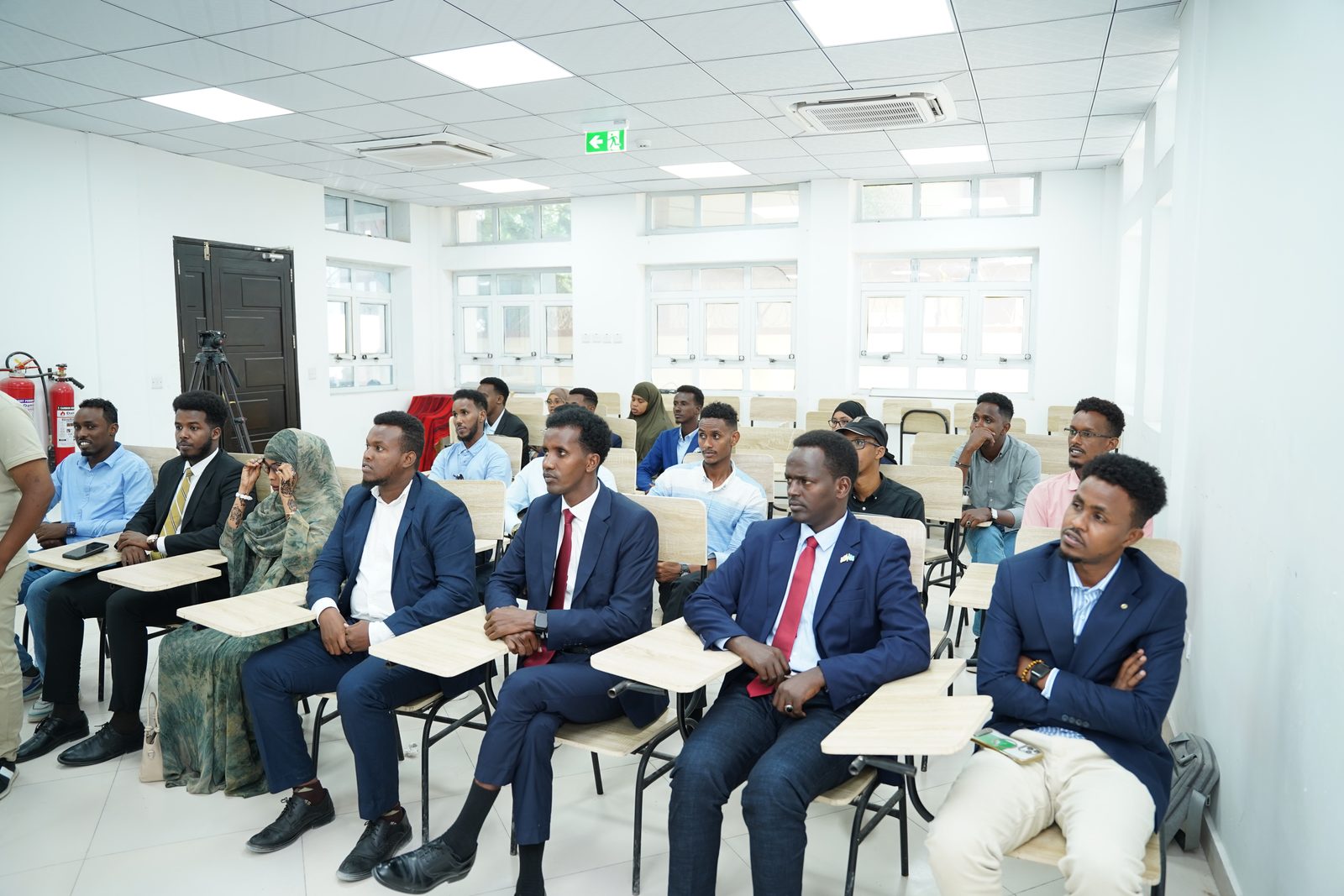
Degree Awarded
Bachelor of Politics and International Relations (BPIR)
Total Credit Hours
188 Credit Hours
Total Courses
62 Courses
Duration
5 Years (10 Semesters)
Semester Length
16 weeks, inclusive of examinations
Programme Start
September intake
Language of Instruction
English
Campus Location
Mogadishu, Somalia
Modes of Study
Full-Time and Part-Time on-campus learning
Overview
The Bachelor of Politics and International Relations is designed to equip students with the analytical skills, theoretical knowledge, and practical insights necessary to understand and engage with the complex dynamics of global and domestic politics. It provides an interdisciplinary approach — combining political theory, comparative politics, diplomacy, international law, security studies, and global governance — and integrates academic rigour with practical learning opportunities including research projects, debates, diplomatic simulations, and internships. The programme fosters ethical awareness, cultural sensitivity, and a commitment to promoting peace, justice, and cooperation in an interconnected world.
Background and Rationale
Somalia's engagement with a rapidly changing regional and international environment — from federal state-building and Horn of Africa diplomacy to global debates on security, trade, and climate — has created a growing need for graduates who understand the theory and practice of politics and international relations. The programme is housed within the Department of Politics and International Relations, part of the Faculty of Arts and Social Sciences, and brings together instructors with backgrounds in political science, law, economics, and international affairs. Students first build a shared foundation in the social sciences before progressing into specialised coursework in international relations, diplomacy, security, and international law. Its explicit orientation is toward the institutions and processes of global governance: how states and non-state actors interact, how foreign policy is formulated and implemented, how international law and organisations structure cooperation, and how diplomats and policy professionals are expected to conduct themselves ethically. Where relevant, courses draw on Somali and Horn of Africa case material.
Vision & Mission
The International Relations programme aims to foster real-world theoretical and professional skills in politics, diplomacy, and international affairs, preparing graduates to contribute meaningfully to governance and global engagement in Somalia and beyond.
To conduct studies explaining, understanding, and improving the changing, evolving, and continuing international relations of Somalia, its surrounding region, and the world at large, from the past to the present and from the present to the future, and to share the results of these studies with academic, political, and social actors, while promoting international experience and global understanding through visits, exchanges, study, instruction, and service.
Our Values
Integrity
Upholding honesty and ethical conduct in political and diplomatic engagement.
Credibility
Producing rigorous, trustworthy analysis of political and international affairs.
Innovation
Applying fresh thinking to complex global and regional challenges.
Transparency
Promoting open dialogue and accountability in governance and diplomacy.
Excellence
Pursuing academic and professional distinction in political science.
Professionalism
Preparing graduates for competent service in government and diplomacy.
Objectives & Learning Outcomes
- 1To engage critically with a range of materials about contemporary international relations.
- 2To develop a critical understanding of the core literature and main theoretical issues in the field of international relations.
- 3To establish a framework for understanding the international dimensions of problems such as environmental degradation and economic globalization.
- 4To develop the research, analytical, and communication skills required for professional work in government, diplomacy, and international organisations.
- 5To foster ethical awareness, cultural sensitivity, and a commitment to peace, justice, and cooperation in an interconnected world.
- 1Explain key concepts, theories, and frameworks in political science, international relations, comparative politics, political theory, international law, and diplomacy.
- 2Analyze and interpret political events, trends, and issues using appropriate theoretical approaches and empirical evidence.
- 3Design, execute, and present research projects employing qualitative and/or quantitative methods, demonstrating academic integrity and critical inquiry.
- 4Assess the causes, consequences, and potential solutions to complex political, economic, and security challenges at local, national, and international levels.
- 5Present ideas, arguments, and findings clearly in written, oral, and digital formats, adapting to diverse audiences and professional contexts.
- 6Engage respectfully and constructively with people from diverse cultural, political, and social backgrounds, upholding principles of equity, justice, and human rights.
- 7Apply problem-solving, negotiation, diplomacy, and leadership skills in academic, policy, or professional settings.
- 8Show readiness to adapt to emerging global trends, technological changes, and evolving political landscapes through continuous personal and professional development.
Programme Duration
- Total duration: five (5) academic years.
- Structure: ten (10) semesters, at a rate of two semesters per academic year.
- Semester length: sixteen (16) weeks, comprising the instructional period and the final-examination period that concludes it.
- Annual intake: one (1) intake per year, commencing in September.
- Academic load: 62 courses and 188 credit hours in total, distributed across the ten semesters as prescribed in the Study Plan.
- Credit-hour equivalence: one (1) credit hour equals 45 contact hours.
Admission & Graduation Requirements
Entry Criteria
- Possess a Secondary School Leaving Certificate or equivalent.
- Have a minimum proficiency in English.
- Pass an entrance examination and/or interview.
- Provide valid medical clearance and vaccination records.
- Submit four passport-size photographs (white background).
- Pay a non-refundable $30 registration fee.
- Complete the university enrolment form.
Required Documents
- Complete application form.
- Official high school transcript.
- Four passport-size photographs.
- Application fee receipt.
- Complete all required coursework and components.
- Pass all courses with no grades of F/Fail, NG/No Grade, or I/Incomplete.
- Maintain a minimum cumulative GPA of 2.00 overall
- Pass a final comprehensive examination.
- Fulfil all academic, ethical, and attendance policies of the faculty.
Career Opportunities
Diplomatic and Foreign Service
Serving as diplomats, consular officers, or policy advisors in embassies, foreign ministries, and international missions.
Government and Public Administration
Working in legislative bodies, government agencies, or policy units at local, national, or regional levels.
International Organizations
Serving in institutions such as the United Nations, African Union, European Union, World Bank, and other intergovernmental bodies.
Non-Governmental and Civil Society Organizations
Engaging in advocacy, human rights work, humanitarian assistance, and development projects.
Research and Policy Analysis
Contributing to think tanks, academic institutions, and research centers focused on political, economic, and security issues.
Security and Intelligence Services
Working in strategic analysis, risk assessment, and intelligence within defense or law enforcement agencies.
Media and Political Communication
Acting as political analysts, journalists, public affairs specialists, or communication advisors.
Private Sector and International Business
Applying political risk analysis, corporate diplomacy, and market intelligence in multinational corporations or consultancy firms.
Education and Academia
Teaching and conducting research in political science, international relations, and related fields.
Delivery & Assessment
- Classroom-based lectures.
- Practical / skills-based sessions.
- Field practicals and study visits.
- Diplomatic simulations and model international conferences.
- Case studies, role plays, and group projects.
- Supervised field internship in a government ministry, embassy, international organisation, or NGO.
- The graduation research project, undertaken under academic supervision.
| Assessment Component | Weighting |
|---|---|
| Written Examinations | 80% |
| Practical / Skills Demonstrations | 10% |
| Coursework, Assignments, and Reports | 10% |
| Total | 100% |
Practical Training
Practical learning is integrated across the programme through applied sessions and a supervised field placement, so that students test theory against the realities of governance, diplomacy, and international affairs before graduation.
- Diplomatic simulations and model international conferences that develop negotiation, drafting, and representation skills.
- Field practicals and study visits to government and international-affairs institutions.
- FLP 5101 Field Internship (Semester 9) — a supervised placement in a government ministry, embassy, international organisation, or NGO.
- The graduation research project (GRAP 5101 / GRAP 5202), undertaken under academic supervision.
Contact Information
Faculty of Arts and Social Sciences, Somali International University (SIU)