
Bachelor of Nursing
Department of Nursing
Prepares professional nurses able to plan, deliver and evaluate safe, evidence-based nursing care across medical, surgical, paediatric, maternity, critical care, mental health and community settings, and to take a leading role within the health team.
Degree Awarded
Bachelor of Nursing (BScN)
Duration
5 Years (10 Semesters)
Total Credit Hours
185 Credit Hours
Total Courses
64 Courses
Language of Instruction
English
Campus Location
Mogadishu, Somalia
Overview
Somalia continues to rebuild its health system amid the challenges caused by years of conflict, limited resources, and shortages of trained healthcare personnel. The Bachelor of Nursing programme has been developed in response to the growing need for competent, ethical, and professionally trained nurses who can address the country's evolving health priorities, combining classroom learning, simulation-based training, and supervised clinical practice in hospitals and community settings, aligned with the standards of the World Health Organization and the International Council of Nurses.
Vision & Mission
To be a leading centre of excellence in nursing education, research, and clinical practice, dedicated to producing competent, ethical, and compassionate nurses who contribute to improving health outcomes in Somalia and beyond.
To deliver high-quality, evidence-based nursing education that prepares graduates to provide safe, professional, and patient-centred care. The program aims to develop knowledgeable, skilled, and ethical nurses who can serve effectively in diverse healthcare settings, promote community health, and contribute to strengthening the national health system.
Objectives & Learning Outcomes
- 1Equip students with the theoretical knowledge and clinical skills necessary to provide safe and effective nursing care across the lifespan.
- 2Enable students to apply scientific research, best practice, and clinical guidelines in decision-making and patient management.
- 3Ensure that graduates adhere to ethical principles, legal responsibilities, and professional standards in all aspects of nursing care.
- 4Prepare students to communicate effectively with patients, families, communities, and multidisciplinary healthcare teams.
- 5Develop students' ability to assess patient needs, analyse clinical situations, and provide appropriate nursing interventions.
- 6Build the leadership qualities and collaboration skills required for effective participation in healthcare delivery and management.
- 7Prepare graduates to participate in health promotion, disease prevention, and community-based initiatives that support population health.
- 8Cultivate an attitude of continuous learning and participation in nursing research, quality improvement, and innovation.
- 9Equip students to provide respectful, culturally appropriate, and patient-centred nursing care in diverse communities.
- 1Apply comprehensive theoretical and clinical knowledge to provide safe, effective, and patient-centred nursing care across the lifespan.
- 2Integrate evidence-based practice by using scientific research, clinical guidelines, and best practice in clinical decision-making and patient management.
- 3Demonstrate ethical, legal, and professional accountability in all aspects of nursing practice while upholding nursing codes and standards.
- 4Communicate effectively and compassionately with patients, families, communities, and multidisciplinary health teams using clear, therapeutic, and culturally sensitive approaches.
- 5Use critical thinking and clinical reasoning to assess patient needs, analyse health conditions, and implement appropriate nursing interventions.
- 6Demonstrate leadership, teamwork, and management skills in delivering coordinated and high-quality healthcare services.
- 7Participate in community and public health activities, including health promotion, disease prevention, and patient education within diverse populations.
- 8Use information technology, documentation systems, and digital tools to enhance patient safety, record keeping, and clinical efficiency.
- 9Engage in lifelong learning and research activities, contributing to continuous improvement, innovation, and advancement of nursing practice.
Programme Duration
- Total duration: five (5) academic years, comprising ten (10) semesters, each 17 weeks in length.
- Academic load: 64 courses and 185 credit hours in total, distributed across the ten semesters as prescribed in the Study Plan.
Admission & Graduation Requirements
Entry Criteria
- High school certificate — grade 12 or equivalent qualification recognized by the Ministry of Education.
- Satisfactory performance on the university entrance examination.
- Satisfactory performance in the personal interview.
- Demonstrated proficiency in English sufficient to follow instruction delivered in that language.
- Physical fitness to undertake supervised clinical practice, confirmed by medical examination.
Required Documents
- Complete application form.
- Official high school transcript.
- Four passport-size photographs.
- Application fee receipt.
- Complete all required coursework and components of the program.
- Pass all courses with no grades of F/Fail, NG/No Grade, or I/Incomplete.
- Maintain a minimum cumulative GPA of 2.00 overall
- Successfully complete all prescribed clinical training hours.
- Complete the final-year clinical placement.
- Submit and obtain approval of the graduation project.
Career Opportunities
Registered Nurse (RN)
In hospitals and health facilities.
Community Health Nurse and Public Health Nurse
Maternal and Child Health Nurse
Emergency and Critical Care Nurse
Primary Healthcare Nurse and Home-Based Care Nurse
School Health Nurse and Occupational Health Nurse
Nurse Educator and Clinical Instructor
Nursing Supervisor and Nursing Administrator
Nurse Researcher and Health Research Officer
Infection Prevention and Control (IPC) Nurse
Humanitarian and NGO Health Nurse
Delivery & Assessment
- Classroom-based learning through lectures, seminars, and tutorials.
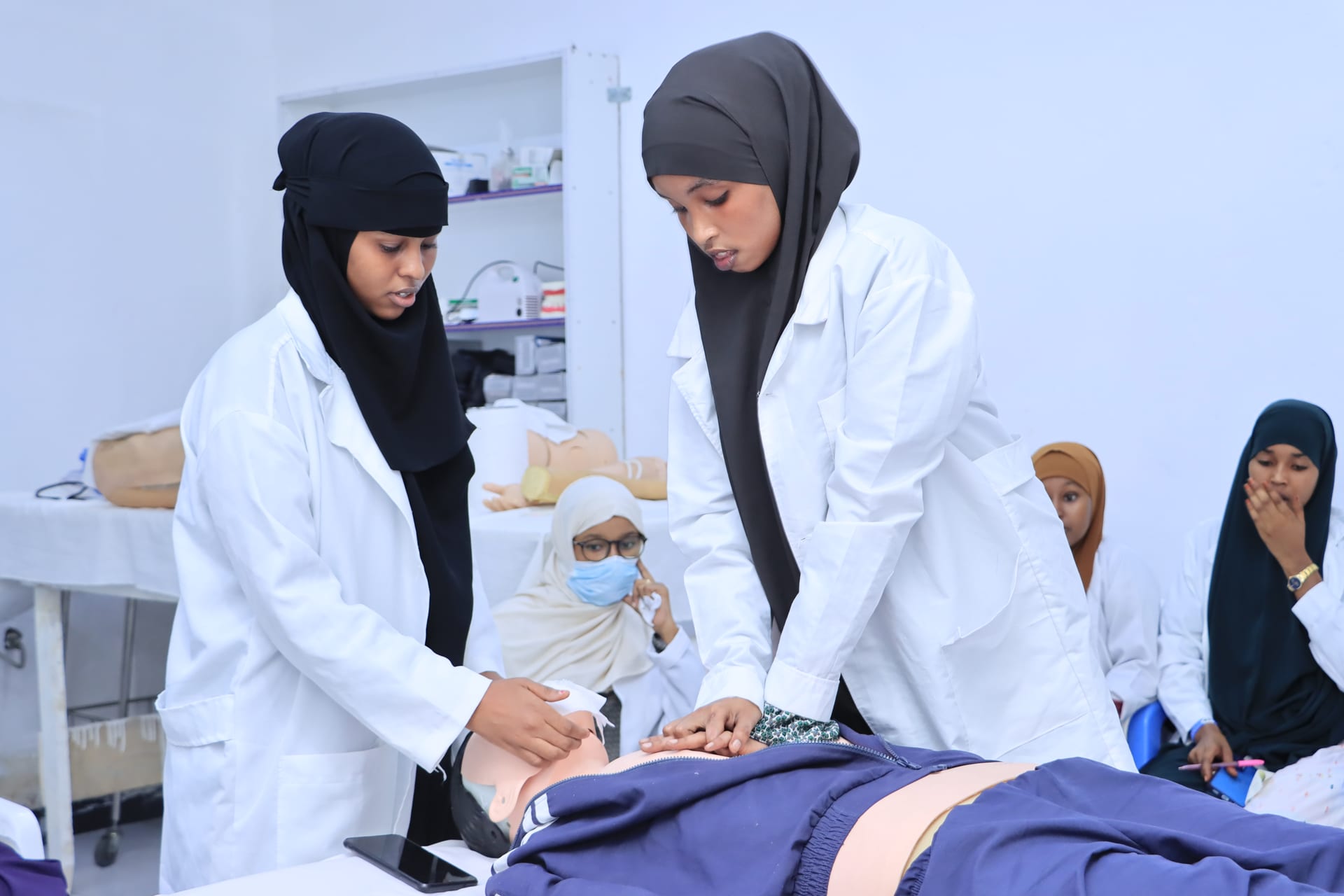
- Laboratory and simulation-based training in the skills laboratory.
- Supervised clinical placement in hospitals, maternity centres, and health facilities.
- Community-based learning through field visits and outreach programs.
- Self-directed and e-learning through online modules, assignments, and research projects.
| Assessment Component | Weighting |
|---|---|
| Written Examinations | 60% |
| Practical and Fieldwork Reports | 20% |
| Class Assignments and Quizzes | 10% |
| Presentations and Participation | 10% |
| Total | 100% |
Faculty and Learning Facilities
- Skills laboratory with simulation manikins and clinical practice equipment.
- Supervised clinical placement sites in affiliated hospitals, maternity centres, and health facilities.
Contact Information
Faculty of Health Sciences, Somali International University (SIU)