
Bachelor of Public Health
Department of Public Health
Prepares public health practitioners who protect the health of whole populations through epidemiology and surveillance, disease prevention and control, environmental and occupational health, health promotion, nutrition and health programme management.
Degree Awarded
Bachelor of Public Health
Duration
5 Years (10 Semesters)
Total Credit Hours
190 Credit Hours
Total Courses
62 Courses
Language of Instruction
English
Campus Location
Mogadishu, Somalia
Overview
Somalia faces some of the most severe public health challenges in the world: recurring drought and famine, high maternal and child mortality, a heavy burden of infectious and vector-borne disease, weak sanitation and water infrastructure, and a health system still recovering from decades of conflict. The Department of Public Health brings together instructors with backgrounds in epidemiology, environmental health, nutrition, and health-systems management, delivering a curriculum structured so that students build a foundation in the basic and behavioural sciences before progressing through the full breadth of public health practice, culminating in health-policy analysis and a full year of supervised field practice.
Vision & Mission
To transform public health in Somalia and the Horn of Africa by empowering individuals and communities through education, research, and innovative health solutions that foster sustainable well-being and resilience.
To deliver high-quality education in public health that integrates theoretical knowledge with practical skills, fostering innovation, ethical responsibility, and a commitment to community health. Our programme aims to prepare graduates who can effectively address the health challenges of Somalia and the region, contribute to the advancement of public health, and excel in both local and global health environments.
Objectives & Learning Outcomes
- 1To develop and implement a curriculum that integrates theoretical knowledge with practical skills, ensuring students are well-equipped to address public health challenges and understand common health concerns, including nutrition, infectious diseases, disaster management, and mental wellness.
- 2To cultivate a culture of research that addresses local health issues, encourages innovation, and contributes to evidence-based practices in public health, promoting lifelong learning and ongoing professional advancement.
- 3To engage with local communities through outreach programs and partnerships, enhancing public health awareness and promoting preventive health measures, while equipping students to understand and respect diverse cultural perspectives in healthcare.
- 4To instil a strong sense of ethical responsibility in graduates, preparing them to lead with integrity and advocate for health equity and social justice in their professional endeavours.
- 5To provide students with opportunities for internships, workshops, and networking that enhance their skills and prepare them for successful careers in diverse health environments.
- 6To promote the development and implementation of innovative health solutions that are sustainable and adaptable to the unique challenges faced in Somalia and the Horn of Africa, contributing to effective diagnostic testing and disease-prevention efforts.
- 1Demonstrate the ability to apply theoretical knowledge and practical skills to effectively address public health challenges, with a comprehensive understanding of key health concerns such as nutrition, infectious diseases, disaster management, and mental wellness.
- 2Exhibit proficiency in conducting research that identifies and addresses local health issues, demonstrating the ability to apply innovative and evidence-based practices that contribute to the field of public health.
- 3Engage effectively with local communities through outreach initiatives, demonstrating the ability to enhance public health awareness and promote preventive health measures, while respecting and understanding diverse cultural perspectives.
- 4Embody a strong ethical framework in professional practice, demonstrating the capacity to advocate for health equity and social justice within communities and organisations.
- 5Be well-prepared for diverse careers in public health, having gained practical experience through internships, workshops, and networking opportunities that enhance professional skills and competencies.
- 6Be equipped to develop and implement innovative health solutions that are sustainable and adaptable to the unique challenges faced in Somalia and the Horn of Africa.
Programme Duration
- Total duration: five (5) academic years, comprising ten (10) semesters, each 17 weeks in length.
- Course load: students typically undertake between four (4) and nine (9) courses per semester.
- Academic load: 62 courses and 190 credit hours in total, distributed across the ten semesters as prescribed in the Study Plan.
- Credit-hour equivalence: one (1) credit hour equals 62 contact hours of combined theoretical and practical instruction.
Admission & Graduation Requirements
Entry Criteria
- High school certificate — grade 12 or equivalent.
- Satisfactory performance on the university entrance examination.
- Satisfactory performance in the personal interview.
Required Documents
- Complete application form.
- Official high school transcript.
- Four passport-size photographs.
- Application fee receipt.
- Successfully complete all required coursework and clinical components.
- Maintain a minimum cumulative GPA of 2.00 overall
- Fulfil all academic, ethical, and attendance policies of the faculty.
- Complete one year of field practice and internship.
- Successfully finish a final-year project (Graduation Project I and II).
- Clear all financial and administrative obligations.
Career Opportunities
Epidemiologist and researcher
Programme data manager
Environmental health manager
Community health officer, operator, or specialist
Health consultant, both local and international
Nutrition specialist — manager, officer, head of department, or consultant
Hospital manager
Primary health care specialist within EPI, surveillance, and vaccination programmes
Disaster manager
Delivery & Assessment
- Classroom-based lectures
- Field practical, outreach sessions, and training programmes
- Workshops
- Guest lectures
| Assessment Component | Weighting |
|---|---|
| Written Examinations | 60% |
| Practical / Skills Demonstrations and Field Training | 30% |
| Coursework, Assignments, and Lab Reports | 10% |
| Total | 100% |
Practical Training
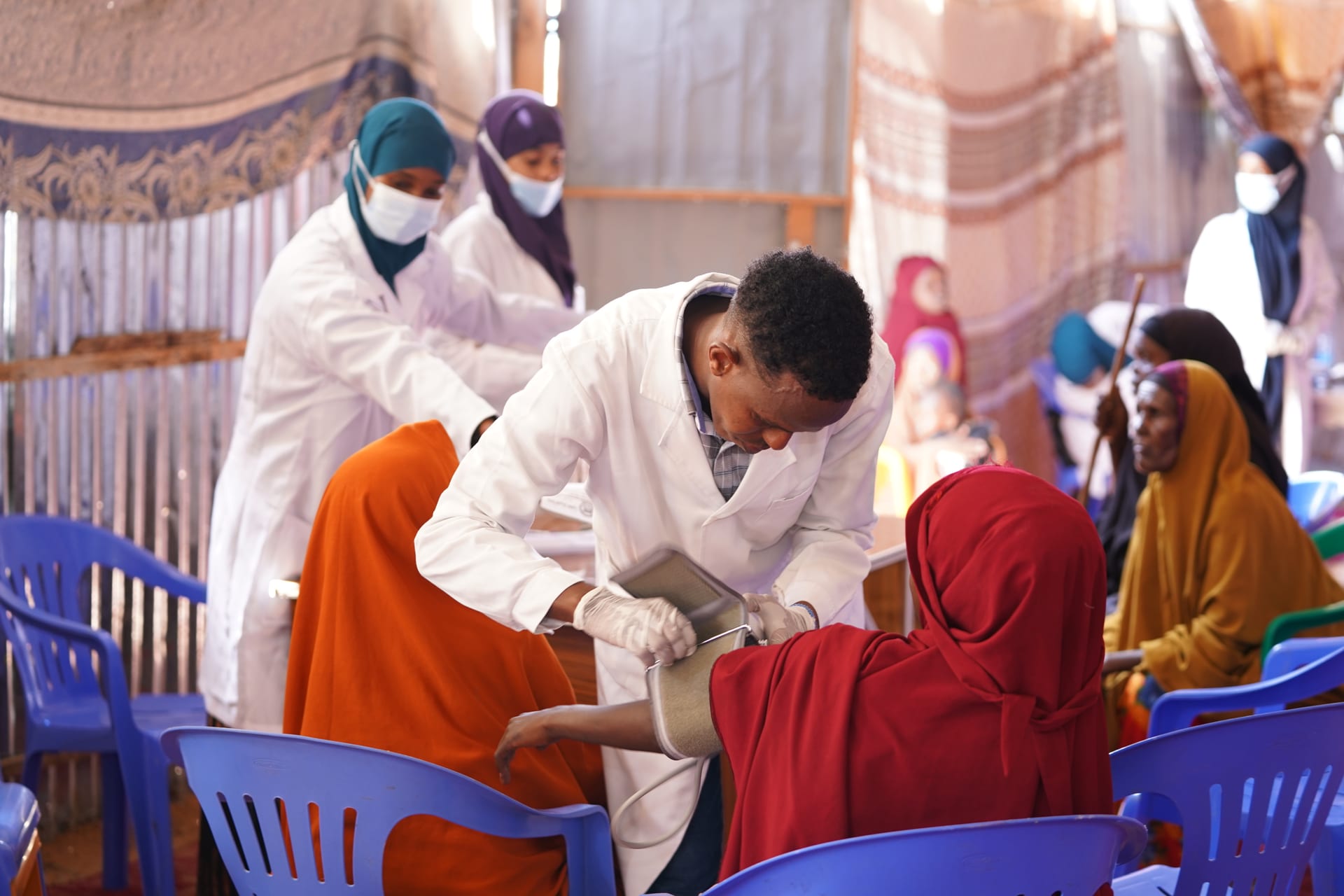
Students actively participate in routine practical training in different health-care delivery settings, such as hospitals and health centres in a variety of districts.
- Maternal and child health programmes and immunisation programmes (routine and campaign).
- Water treatment and purification systems, and nutrition programmes.
- Research and data analysis in health programmes (survey and epidemiology case detection).
- Regular assessment of practical skills and field practice reports, based on observation and field practice.
Faculty and Learning Facilities
- Well-equipped practical facilities for food, water, nutrition, and health-service-delivery training.
- Computer laboratories and a laboratory skills centre.
- University Library: access to public health textbooks, journals, and online databases.
Contact Information
Faculty of Health Sciences, Somali International University (SIU)